
Rencontre avec Fidèle Houssou Gandonou
Fidele
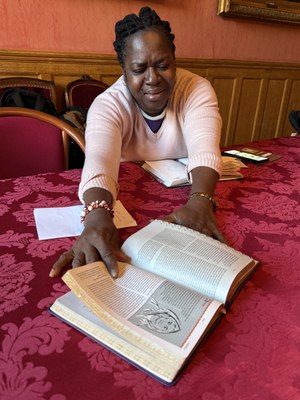
Cette bible, basée sur le texte biblique en français, ne propose pas de modifications des Écritures, mais ajoute des contenus originaux : 365 méditations quotidiennes, 52 thématiques liées à la vie des femmes, 52 portraits de femmes de la Bible et des citations pour nourrir la réflexion spirituelle. Au total, ce sont 291 contributrices africaines – théologiennes, biblistes, psychologues, sociologues ou femmes engagées dans la société civile – qui ont participé à cette œuvre collective et œcuménique.
Pour Fidèle Houssou Gandonou, l’enjeu est clair : permettre une rencontre vivante entre la parole de Dieu et les réalités quotidiennes. Dépressions, violences, héritages, reconnaissance ou intégrité sont autant de sujets rarement abordés frontalement dans les Églises, mais qui trouvent ici un espace de parole et de méditation. « Il ne s’agit pas seulement de lire la Bible, mais de la vivre dans son contexte », souligne-t-elle.
Au Bénin, cette dynamique se prolonge concrètement à travers l’initiative « Parole des femmes, parole de Dieu », un cadre hebdomadaire d’échange et de prière qui encourage les femmes à prendre la parole et à reconnaître leur valeur. Un projet de traduction de La Bible de méditation dans les langues locales est également en cours, afin de rendre la Parole accessible au plus grand nombre.
À travers son engagement, Fidèle Houssou Gandonou incarne une théologie enracinée, audacieuse et porteuse d’espérance, où la foi devient un levier de transformation personnelle et sociale.
Profondément reconnaissante de l’aide apportée par la Cevaa pour l’obtention de sa bourse de doctorante, elle soutient pleinement notre Action commune.
Meeting with Fidèle Houssou Gandonou
Committed, passionate, and deeply rooted in her African context, Fidèle Houssou Gandonou is one of those voices that are renewing the reading of the Bible and questioning the place of women in the Church and society. A doctor of theology specializing in feminist ethics and director of the Bible Alliance of Benin, she is one of the contributors to La Bible de méditation par les femmes d'Afrique (The Bible for Meditation by African Women), a unique work that offers a contextualized reinterpretation of the Scriptures based on the experiences of African women.
This Bible, based on the French biblical text, does not propose any changes to the Scriptures, but adds original content: 365 daily meditations, 52 themes related to women's lives, 52 portraits of women in the Bible, and quotations to nourish spiritual reflection. A total of 291 African contributors—theologians, biblical scholars, psychologists, sociologists, and women involved in civil society—participated in this collective and ecumenical work.
For Fidèle Houssou Gandonou, the challenge is clear: to enable a living encounter between the word of God and everyday realities. Depression, violence, inheritance, recognition, and integrity are all topics that are rarely addressed head-on in churches, but which find a space for discussion and meditation here. “It's not just about reading the Bible, but living it in its context,” she emphasizes.
In Benin, this dynamic is being extended in practical terms through the initiative “Parole des femmes, parole de Dieu” (Women's Words, God's Words), a weekly forum for discussion and prayer that encourages women to speak out and recognize their value. A project to translate the Meditation Bible into local languages is also underway, with the aim of making the Word accessible to as many people as possible.
Through her commitment, Fidèle Houssou Gandonou embodies a theology that is deeply rooted, bold, and full of hope, where faith becomes a lever for personal and social transformation.
Deeply grateful for the help provided by Cevaa in obtaining her doctoral scholarship, she fully supports our Joint Action.